
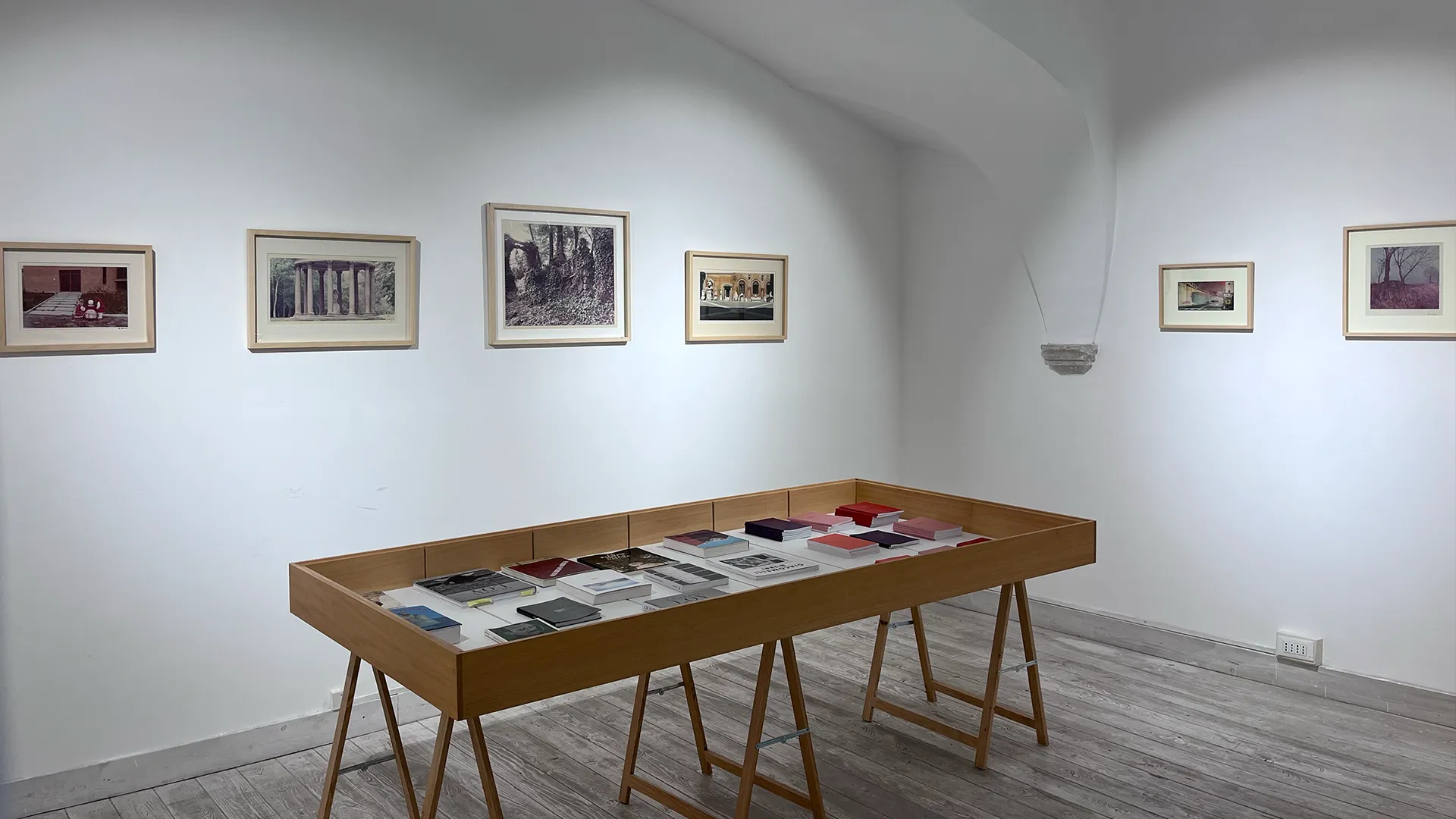
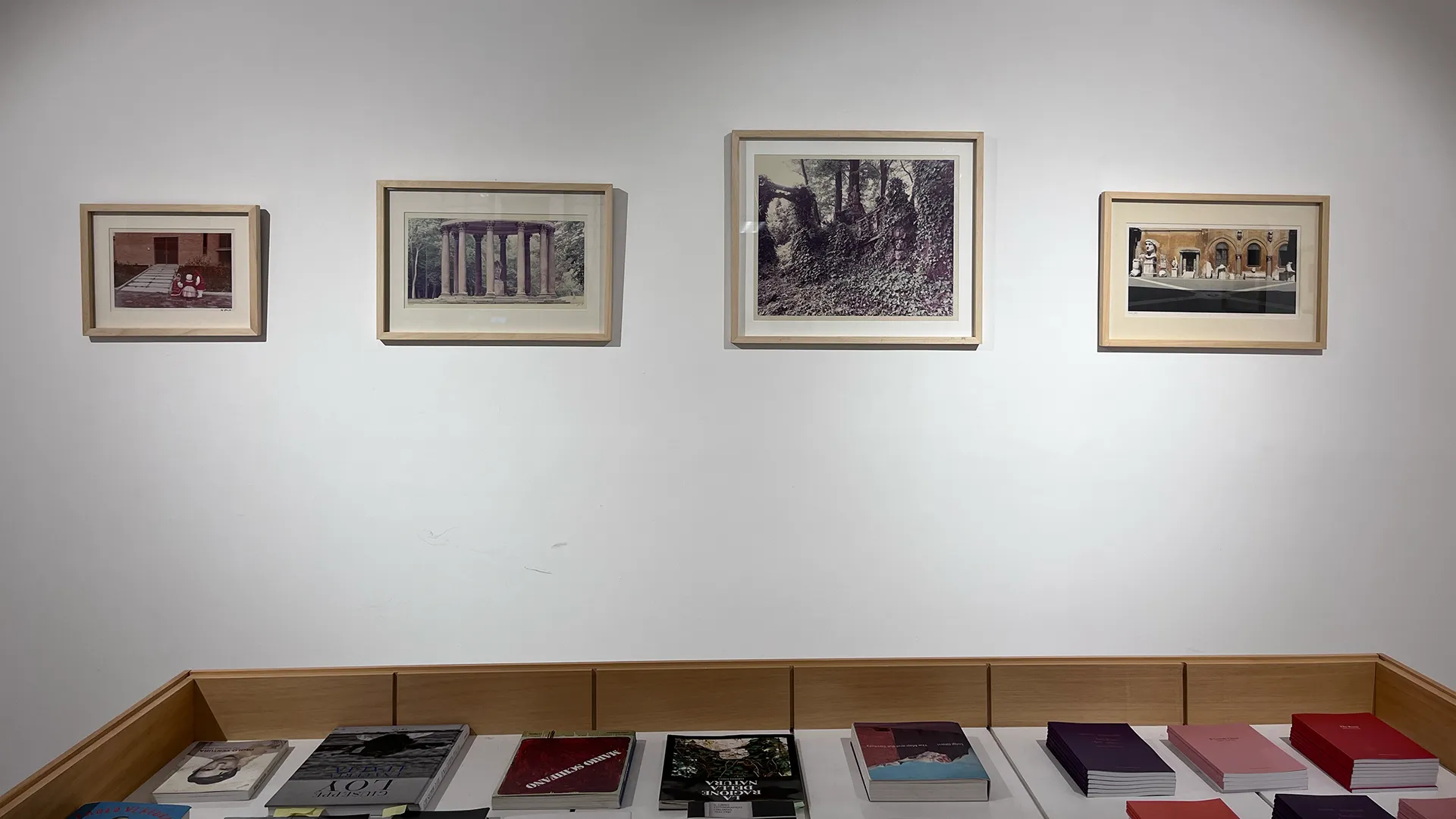
From Thursday, February 10, 2022, until Saturday, April 16, 2022, EDDart presents “Un mio Paesaggio,” photographic variations on the theme, in the exhibition spaces of Palazzo Taverna, Rome. An exploration of the landscape, articulated through some of the most innovative visions in the history of Italian photography that, from the 1950s onwards, have contributed to changing the iconographic framework historically associated with our country.
The exhibition opens with four photographs by Mario Giacomelli, who was the first to overturn the pre-existing idea of landscape, distancing it from reality and from the notion of the “certain,” moving instead toward an abstract composition that mirrors humanity and its deepest nature.
The exhibition continues with five works by Luigi Ghirri and two by Olivo Barbieri, key figures in pivotal moments of Italian photographic history such as Viaggio in Italia. In 1984, this project introduced a new concept of landscape for the first time: marginal elements like paved roads, streetlights, and isolated houses gain significance and become part of the Italian collective imagination. The photographs on display belong to different periods and allow viewers to appreciate the salient characteristics of these two masters of photography—for example, in Barbieri’s case, the focus on artificial lighting that characterizes “Tokyo 1992”.
The exhibition then presents works by Mario Schifano and Paolo Ventura, different yet united by a research that is at once formal and deeply connected to the history of painting: on one hand, Polaroids altered with tempera or collage; on the other, Ventura’s dreamlike compositions, both born from a desire to reinvent photographic language through profound formal cross-pollinations.
Finally, particularly compelling is the gaze of Giuseppe Loy, a photographer who, until February 27, is the subject of a major retrospective at Palazzo Barberini. Five of his works are presented here, offering insight into his vision, in which the “human” element and attention to others merge, creating an empathetic landscape composed above all of people, workers, and stories.