
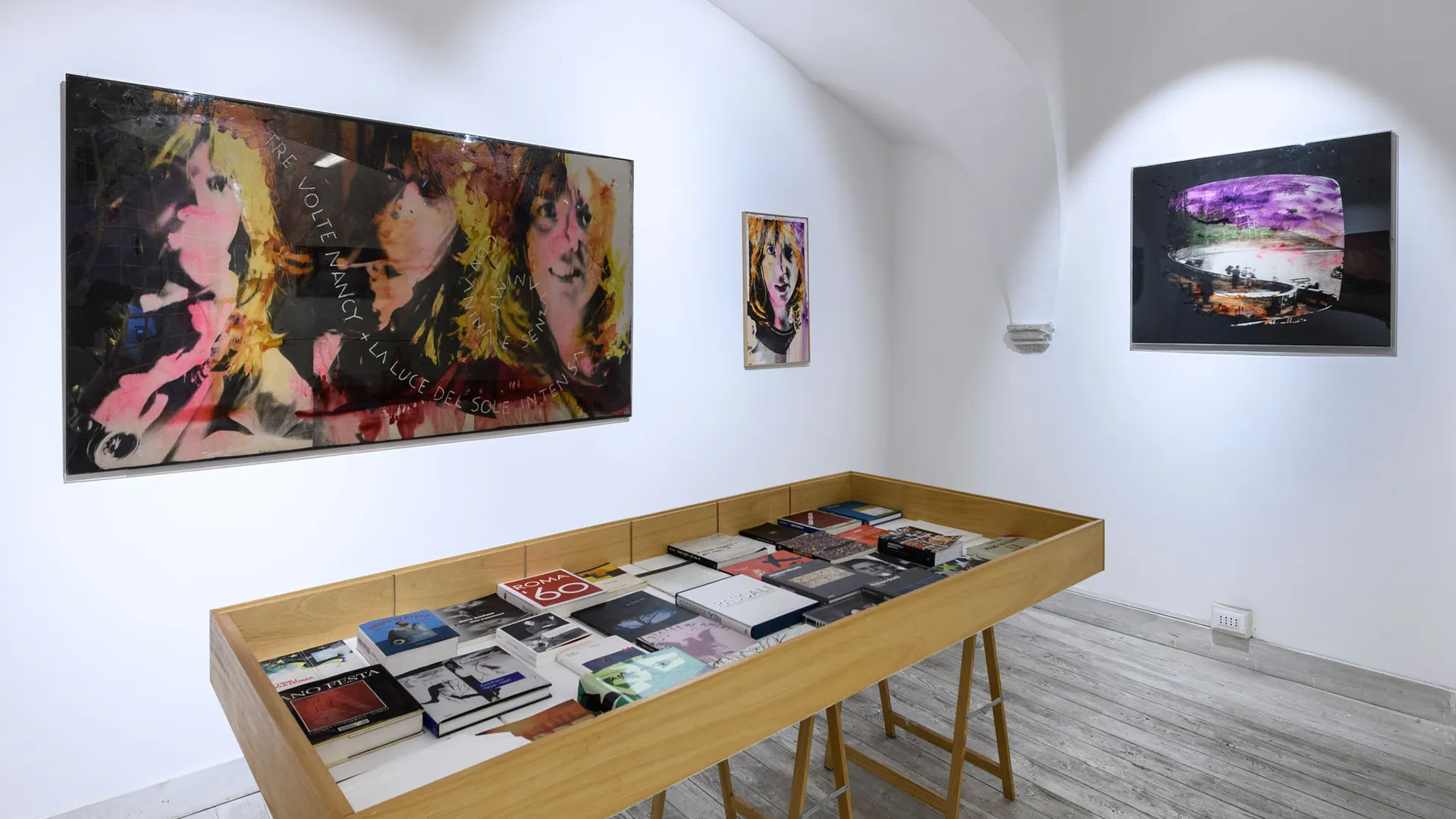
EDDart is proud to announce, one year after the success of Mario Schifano. Per Terra, carpets and works, a new exhibition entirely dedicated to the “television screens” created in the 1970s.
Among Mario Schifano’s many projects, there was also a film based on a story by Michelangelo Antonioni, titled The Night Traveler. The film was never realized, yet it marks a turning point—a moment of transition through cinema: from pure painting to emulsified canvases and photography. It was the late 1960s, and painting seemed to have reached a dead end. At that point, Schifano found a new tool: the camera, and above all, television. Many televisions, left on in the dark, broadcasting images without interruption. A continuous flow, like photographic shots: news, nudes, program idents, landscapes, wars, faces.
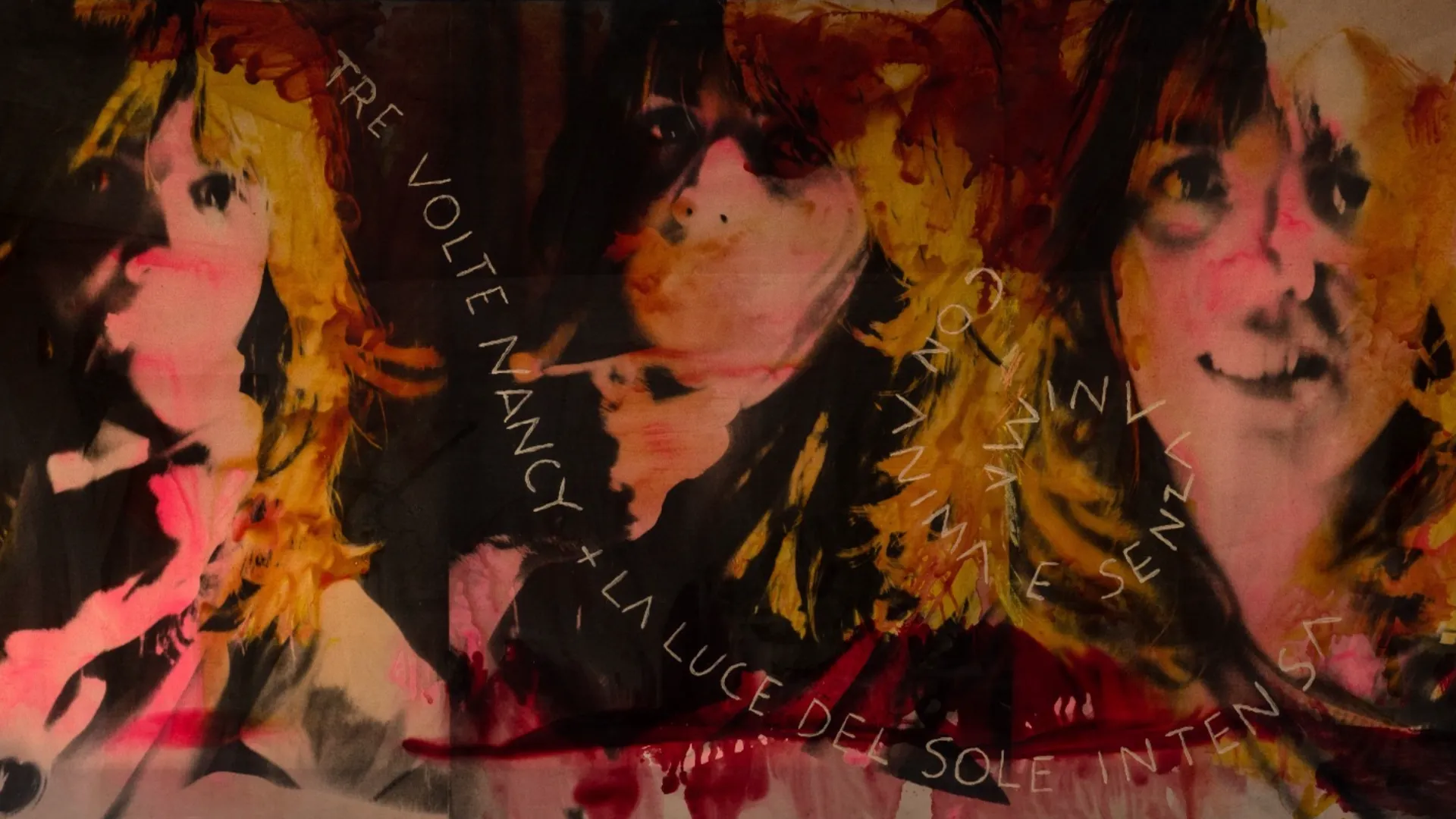
Schifano felt at ease with the speed allowed by the “emulsified canvas,” often covered with sheets of perspex in varying tones to create an additional screen. On display in EDDart’s Roman spaces, a selection of TV Landscapes invites viewers into the artist’s imagination and reveals his ability to fix onto canvas the uninterrupted flow of images from the outside world. Nearly anemic landscapes, with just a few elements outlining sky and earth; more defined views, almost like postcards; portraits—such as that of Nancy Ruspoli, the artist’s partner for several years, also honored in the central work of the exhibition—and then the iconic palm tree, multiplied across overlapping screens, a frame from an accident, a small nude. A selection that sheds light on a precise phase of Mario Schifano’s career, one that strikingly reveals its astonishing relevance today.