
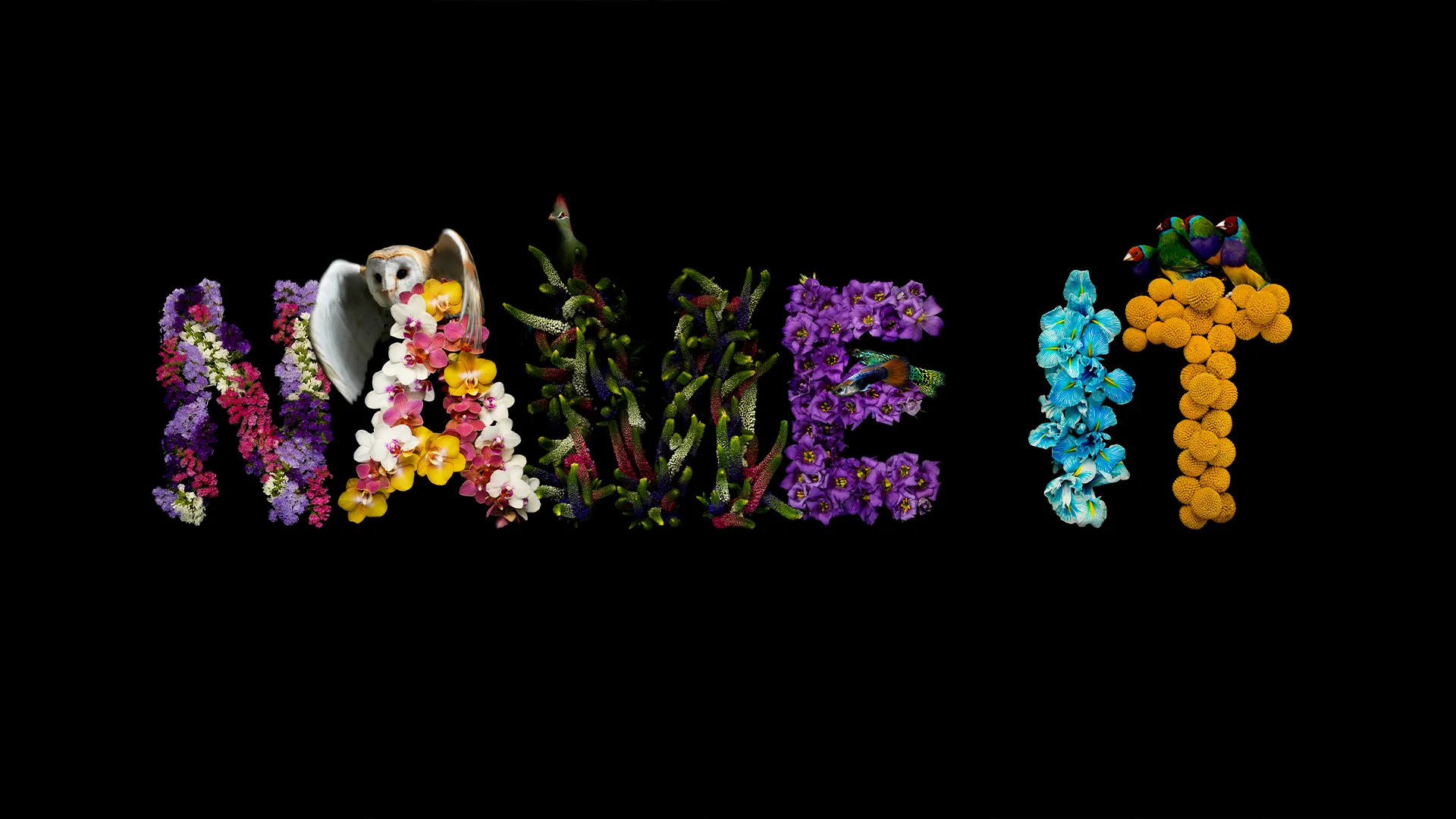
From Thursday, September 23 through Saturday, October 16, 2021, EDDart presents the exhibition Marco Schifano, Name It! in the gallery spaces at Palazzo Taverna, Rome. The exhibition focuses on the artist’s most recent photographic research, based on the creation of a utopian alphabet composed of flowers and animals.
The project originates from the artist’s desire to give his daughter a photograph of colorful flowers: the idea is that, over time, a child might come to understand that from the perfect aesthetics of that form, her name will one day emerge. In this way, Schifano’s unreal compositions enter everyday life for the first time, becoming sounds as well as forms. The aesthetic and illusory search for a new reality lies at the core of his work.
The twenty-one photographs on view, like the twenty-one letters of the Italian alphabet, were created by combining varieties of colorful flowers to enhance their aesthetic and visual impact. As Edward Steichen once said, “Every artist begins with a blank canvas, a piece of paper… the photographer begins with the finished product,” a statement that resonates strongly in this case when considering Schifano’s technique. The photographic act is only one part of the artist’s long creative process, which is based on meticulous work composing settings that are photographed and then fused together.