
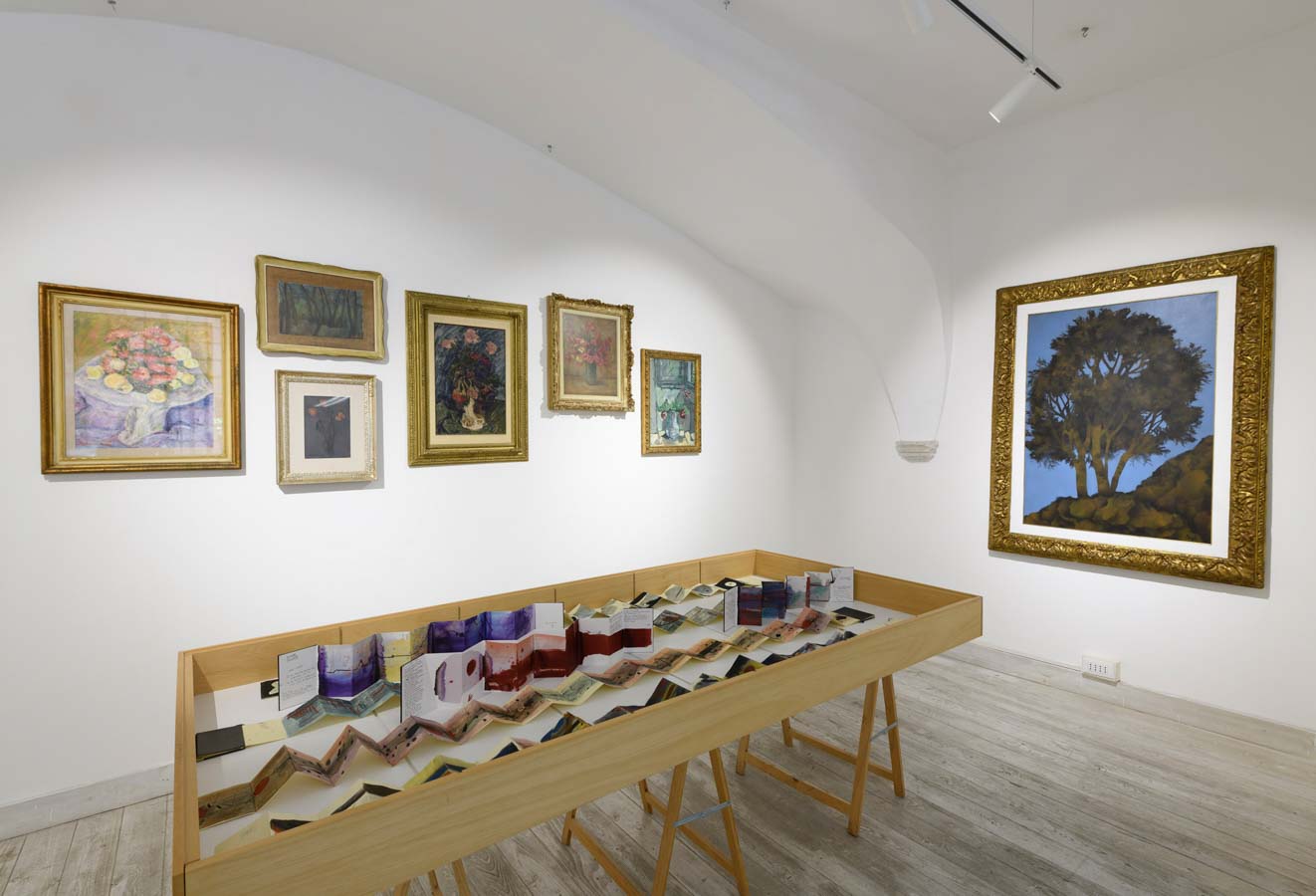
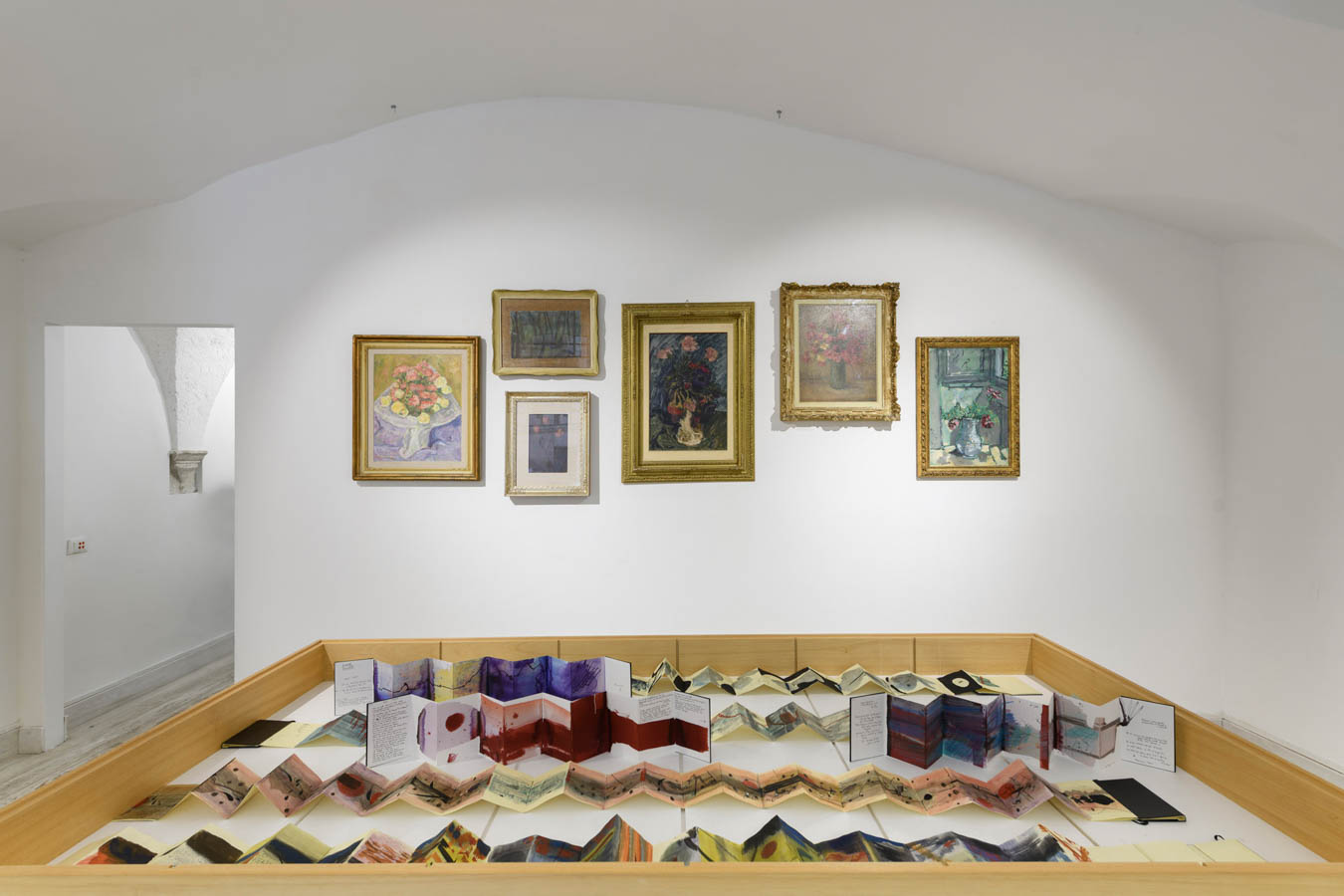
Motifs drawn from the world of Botany have always inspired the visual arts, serving as symbols of beauty, transience, or simple adornment. Considered a minor genre since the Renaissance compared to historical, religious, or mythological painting, the floral theme has nonetheless maintained a distinct place over the centuries. Illuminated by works and artists who, alongside their major productions, returned to the study of plants, fruits, and flowers, it has also produced a specific strand of art and collecting.
As with other matters, the twentieth century represents a point of apparent change: nothing seemed further from the avant-gardes and the revolutionary spirit of new movements than a bouquet of gladioli in a vase. Yet, even during the most militant decades, the most diverse floral expressions maintained a remarkable vitality, representing a safe haven, certainly, but also a testing ground for the technical and chromatic skills of many masters.
Our exhibition begins in the 1930s with a work by Corrado Cagli, Garofani (Carnations), outlined with a few confident brushstrokes in warm colors against a dark background, and leads to the works of Caterina Sammartino, a Roman artist born in 1997, who explains: “Specifically, for these two canvases, I first created a portrait of a natural environment and then left the sheet on-site. The work thus lived and interacted with its natural context.” Between these two poles lies a journey through various Italian authors, differing not only in their dates of birth but also, and above all, in their formal interpretation of the “floral” subject.
While for some artists flowers complement iconographic projects—such as Giorgio de Chirico, who, in the work on display, adorns the head of his Ceres with flowers—for others, they are an essential theme, a subject to be observed and reconsidered at different times and from many perspectives. Thus, while Elisa Montessori (Genoa, 1931) has carried her calla lilies with her over the years, interpreting them in various versions, Pasquarosa, with irrepressible pictorial energy, captures many diverse floral compositions in red and blue on canvas, much like Felice Carena, for whom she had posed as a model upon first arriving in Rome. It is wonderful to find them exhibited side by side through their shared botanical passion, as is the case with Mario Mafai and Antonietta Raphael, featured in our selection with two works that look at the natural world through their respective, distinct perspectives and techniques.